
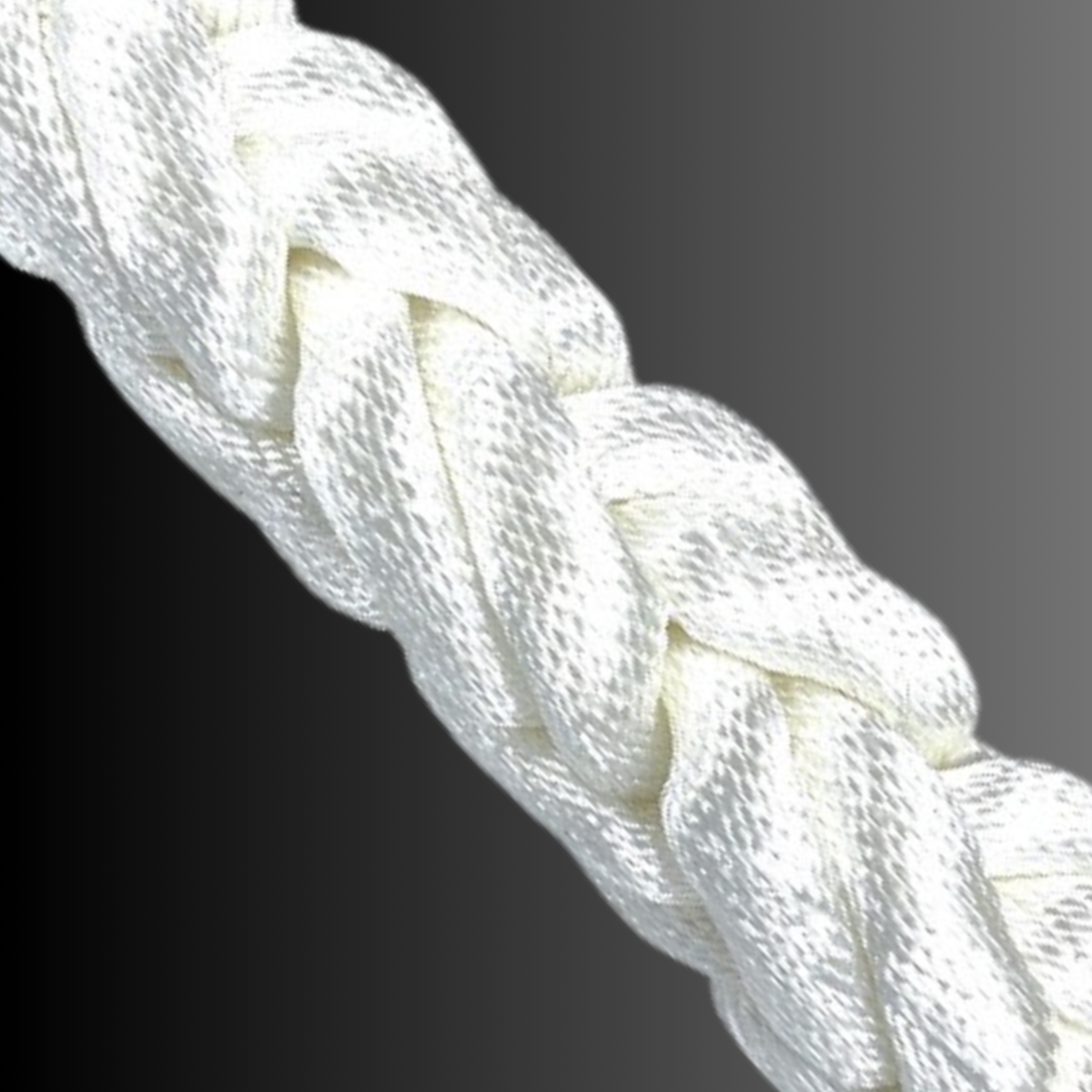
Securing a vessel against wind, current and passing traffic is no simple task. Among synthetic options, nylon remains a premier choice for handling these dynamic forces.
Why Choose Nylon?
- Shock Absorption: Nylon stretches 20-35% at its breaking load. It acts like a massive rubber band, absorbing sudden kinetic energy and protecting deck machinery from peak loads.
- Tough & Durable: It boasts a high strength-to-weight ratio and excellent resistance to abrasion against chocks and fairleads.
When to Use Nylon Lines
- Exposed Berths: Provides the continuous flexibility needed to ride out heavy swells and wind gusts.
- Small/Mid-sized Vessels: Easy to handle, soft on the hands and offers perfect elasticity for lighter displacements.
- High-Traffic Areas: Cushions harsh tugs caused by the displacement waves of passing ships.
When to Use Nylon Tails
Large commercial ships require stiff primary lines (HMPE or steel wire) to prevent drifting, but their lack of stretch makes them vulnerable to shock-loading. Splicing an 11m to 22m nylon tail onto a rigid primary line introduces a controlled “fuse” of elasticity, allowing the system to absorb sudden impacts while keeping the ship firmly in place.
Caution
Nylon loses roughly 10-15% of its tensile strength when wet. As per OCIMF / MEG4 guidelines, always ensure your Tail Design Break Force (TDBF) is calculated and tested under wet conditions.
➰ 𝗕𝗹𝗮𝗰𝗸 𝗥𝗼𝗽𝗲 offers premium Nylon ropes and tails for your vessels’ requirements. Explore them here.