
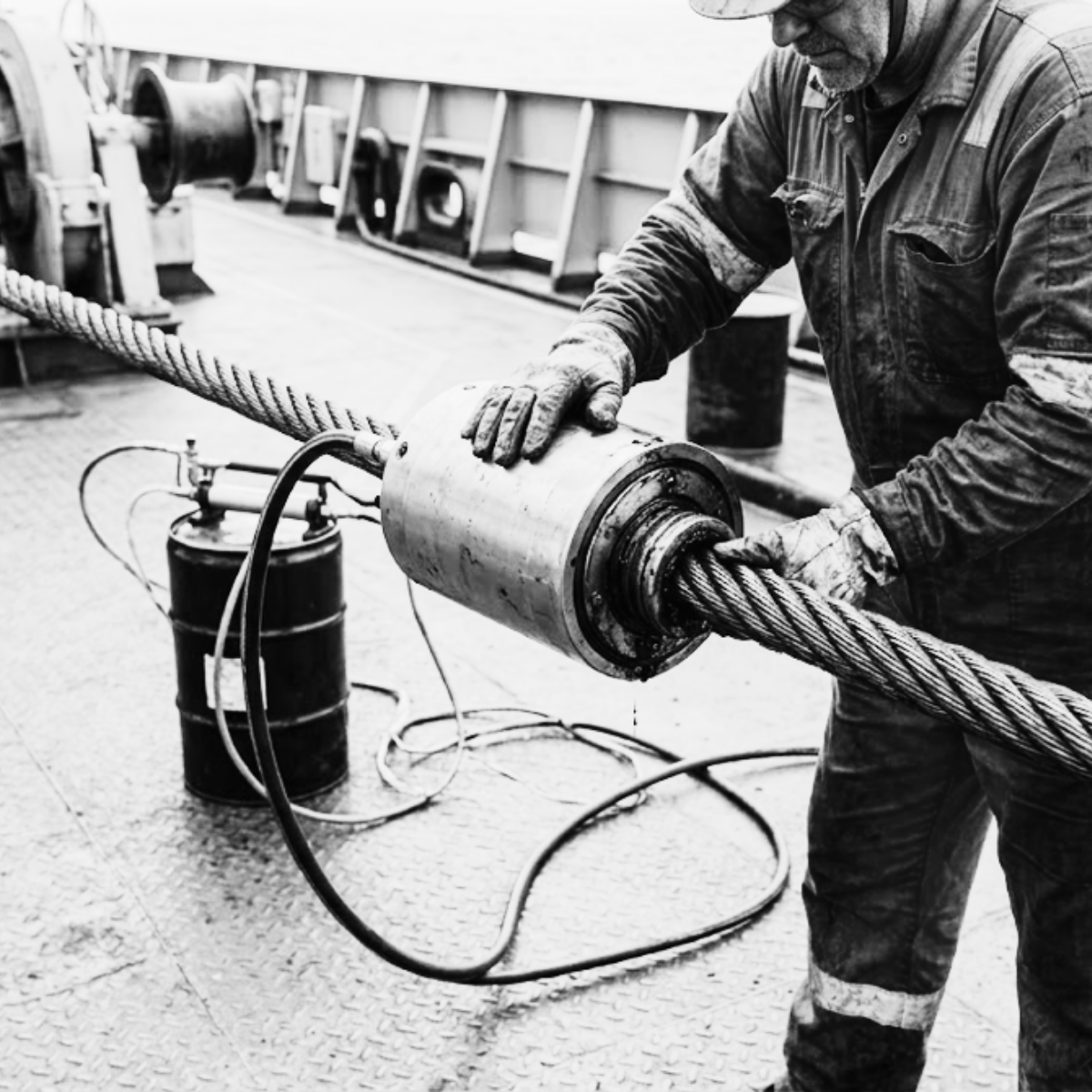
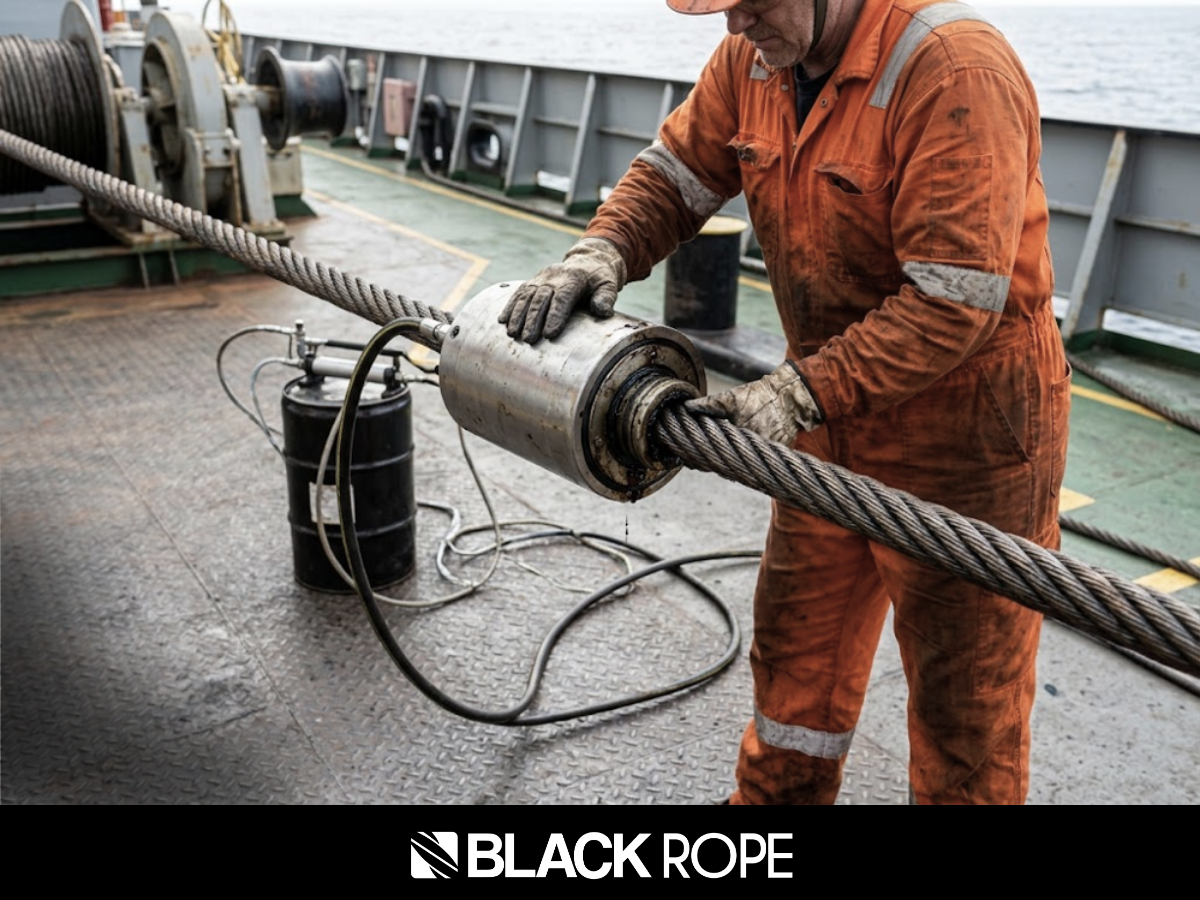
Proper lubrication is the single most critical maintenance routine for extending the lifespan of steel mooring wires. A wire rope is not a static piece of hardware; it is a complex mechanical device. As the wire bends over fairleads and tension under load, its internal strands continuously rub against each other.
Without effective lubrication, internal friction and saltwater ingress will rapidly destroy the rope from the inside out, long before visible rust appears on the surface.
The Two-Stage Lubrication Strategy
For marine environments, applying a single layer of heavy grease over a dirty wire is a critical error. Best practices dictate a two-stage approach to ensure both internal and external protection.
1. Penetrating Lubricant First: A lightweight, penetrating oil or grease must be applied first. This saturates the Independent Wire Rope Core (IWRC), displacing moisture and lubricating the inner strands to prevent friction-induced wire failure.
2. Coating Lubricant Second: Once the core is saturated (ideally allowing 24–48 hours of dwell time), a heavier coating lubricant is applied. This seals the outer surface against saltwater spray, rain, and abrasive deck contaminants.
Application Best Practices
To maximize the effectiveness of the lubrication process, deck crews must adhere to strict application protocols.
Clean Before You Coat
Applying new lubricant over old, grit-filled grease creates an abrasive paste that accelerates wear. The wire must be cleaned thoroughly using stiff wire brushes, compressed air, or specialized wire rope solvents before any new lubricant is applied.
Use Pressure Lubricators
Manual swabbing with brushes or rags only coats the outer strands and fails to reach the core. For heavily loaded maritime ropes, automated high-pressure lubricator collars are the gold standard. These systems clamp around the wire and force lubricant deep into the core as the winch slowly hauls the line in, ensuring complete, void-free coverage.
Avoid Over-Lubrication
More is not always better. Excessive surface grease acts as a magnet for abrasive particles like coal dust, sand or rust flakes. After application, excess surface lubricant should be wiped down.
Inspection and Frequency Guidelines
Routine schedules must be adapted based on the vessel’s operating environment and duty cycle.
• Frequency General industry best practices recommend lubricating active mooring wires at least quarterly, or bi-monthly in highly corrosive or high-cycle environments.
• Storage Protection: Spare mooring wires must be heavily coated before long-term storage and kept on pallets in dry, well-ventilated areas, away from bulk chemicals or extreme heat.
• The “Hidden” Inspection: The cleaning phase before lubrication is the optimal time to inspect the wire. Stripping the old grease often reveals broken wires, localized crushing, or deep-seated corrosion that would otherwise remain hidden.